Love & Legacy: Día de los Muertos
“Love & Legacy” is an essay series that explores how different cultures commemorate loss and death, transforming mourning into celebration and legacy, and turning that legacy into activism. We invite you to carry the legacy forward by honoring someone special through donations or bequests to WILPF US, helping to sustain our work. For more information about leaving a legacy at WILPF, please contact plannedgiving@wilpfus.org.
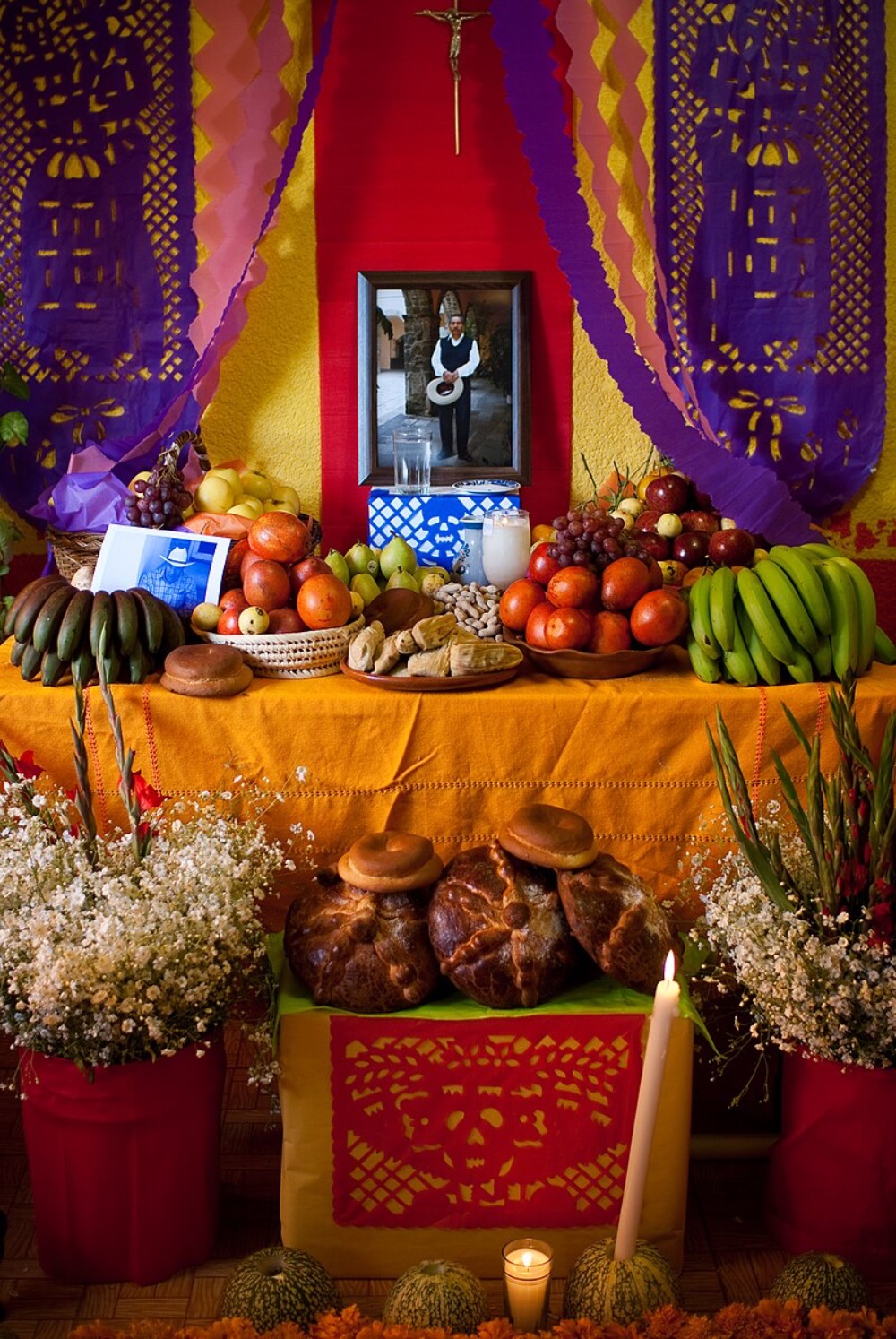
Día de los Muertos, or the Day of the Dead, is a two-day holiday at the beginning of November dedicated to remembering and celebrating departed loved ones. To encourage the dead to visit the land of the living, families create ofrendas (offerings) that include photographs, personal items of the deceased, and traditional Mexican food or other consumables. This ritual symbolizes sharing a meal that transcends the barriers between life and death.
Día de los Muertos has its roots in the time of the Aztecs, who honored Mictēcacihuātl, the Queen of Mictlān (the underworld) and Lady of the Dead. On this day, Mictēcacihuātl would ascend to the land of the living to ensure that the bones of the deceased were being respected by the living. The Aztecs celebrated her ascension with dancing and food, expressing their gratitude for her protection. When Spanish conquistadors arrived, they blended Día de los Muertos with “All Saints Day” and “All Souls Day,” holidays that originated in pagan traditions but were adopted by the Catholic Church. This fusion of Aztec and Catholic practices gave rise to the Día de los Muertos we recognize today.
A striking symbol of the holiday is the skull imagery, often depicted with a smile to mock death. The most famous representation is “La Catrina,” created by the Mexican engraver José Guadalupe Posada. Posada originally named the work “Calavera Garbancera”—a reference to garbanceras, indigenous women who sold garbanzo beans in street markets—and illustrated La Catrina in extravagant attire to satirize the Mexican upper class’s preference for European clothing over indigenous styles. La Catrina rose to prominence during World War II, when a collaborative initiative by the US and Mexican governments showcased Posada’s work at the Art Institute of Chicago to promote American-Mexican solidarity. Today, it is common to see La Catrina impersonators at Día de los Muertos celebrations, watching over the crowd.
Activist Legacies: Spotlight on Dolores Huerta
Born in New Mexico in 1930, Dolores Huerta is a proud Mexican-American leader of the Chicano movement. She briefly worked as a teacher and, after witnessing many impoverished children of farmers in her classroom, recognized the need for change. In the 1950s, she turned to labor activism. She co-founded the Stockton chapter of the Community Service Organization (CSO)—a group that led voter registration drives and advocated for economic improvements for Hispanic communities. There, she met César Chávez, the organization’s executive director and a prominent labor activist.
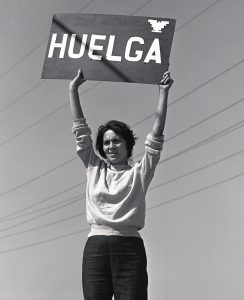
Dolores Huerta calls for a strike in 1965. Photo by El Malcriado. Public domain image.
In 1962, Huerta and Chávez left CSO to form what would become the United Farm Workers of America, rallying thousands through strikes for better working conditions. Huerta played a crucial role by leading negotiations, initiating boycotts, and lobbying for workers’ rights. She famously coined the movement’s rallying cry, “Sí se puede,” which translates to “Yes, we can.” President Barack Obama later adopted this phrase during his campaign and acknowledged Huerta, awarding her the Presidential Medal of Freedom in 2012. Huerta’s intersectional approach made her stand out among her peers; she recognized that the safety concerns of female farm workers extended beyond general working conditions to issues like sexual assault and child safeguarding.
In 2003, Huerta founded the Dolores Huerta Foundation for grassroots community organizing, which focuses its social justice efforts in California. She continues to advocate for the presence of women and Latinas in electoral offices, deliver speeches on civil rights and policy, and inspire activists everywhere.
“Love & Legacy” is an essay series exploring how cultures commemorate loss and death, turn mourning into celebration and legacy, and legacy into activism. We invite you to carry the legacy forward: honor someone special by donating in memoriam or making a bequest to WILPF US to sustain our work. Contact plannedgiving@wilpfus.org to learn about leaving a legacy at WILPF.
