Cuban Resilience Despite Hurricanes and US Blockade
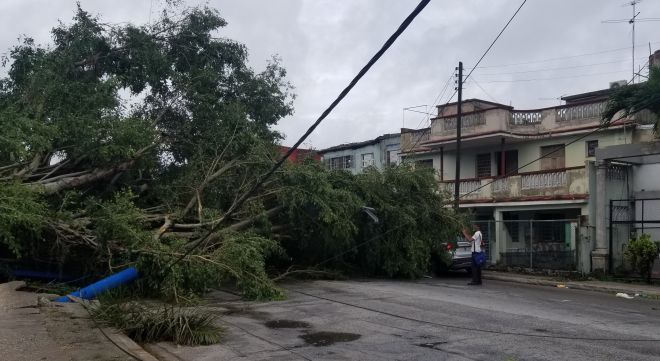
Cubans care for each other. Saving lives is the first priority for the government and helping each other is what the people do. Human solidarity persists even in these hard times, deliberately made as hard as possible by US economic siege warfare.
On Wednesday, November 6, Hurricane Rafael hit central Cuba, and I was there. This is a contemporary account written from Marianao, Havana, four days later, while our electricity was still out.
Slamming Wind and Water
Slamming Wind and Water
It’s hard to assess the damage from here because the entire electricity system went down. Considering the damage from the hurricane and its recently restored state after the collapse two weeks ago, this was not surprising. The wind and water came from the southeast with tremendous force, as if an entire battery of firehoses were blasting the walls and windows from that direction. It drove water straight through the closed and fastened windows. I managed to soak up quarts and quarts of water off the floor with a dirty rag and a bucket, but more kept coming in all the time.
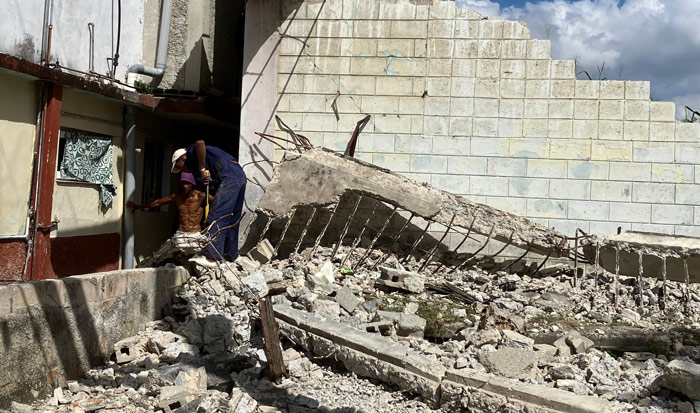
Ciclón derrumbe: People clearing after partial collapse. Credit Leni Villagomez Reeves
It toppled a lot of trees—some broke, and some had less root-hold in the ground than the force of the wind could withstand. A tremendous number of branches were torn off as well. Many power poles and wires were knocked down, leaving the area without electricity.
Out in the Streets Clearing Up
The next morning was quiet, and everyone was out in the streets. Clearing and sweeping the sidewalks was the most popular activity, which is notable because, if our experience was typical (and why not?), everyone also had plenty of mopping up to do inside. By Thursday night, some areas had their power restored, with more progress made on Friday and Saturday. But this part of Marianao, with its abundance of trees, suffered extensive damage. On Saturday, crews worked until midnight, and some tantalizing lights appeared on a different street just a block away. Unfortunately, it was part of a different circuit.
Prolonged Power Outage
By Sunday, our lights were still out. All the perishable food that hadn’t been eaten had spoiled. We worried about how much water remained in the rooftop tank, especially since it was water delivery day (every other day). The water cannot rise to the tank on its own; it needs a booster pump. We’ve been saving water in some of the usual gross ways while trying not to make things too unpleasant. Despite it being Sunday, trucks and even a bulldozer were out, scooping up fallen trees and debris. Still, we are waiting.
There Were No Deaths
We are waiting for electricity. Our phones are dead, and there’s no connection anyway. The refrigerator has been at room temperature for days and smells terrible. Honestly, it’s no fun at all. But: no one died. This is Cuba—the civil defense capital of the world. Everyone at severe risk was evacuated—not just “warned to evacuate” but actually transported by bus, provided with a place to stay (often in school dorms), and given food. Yes, it’s heartbreaking to watch this unfold on television before the event, seeing people with only what they can carry and knowing they face the prospect of losing everything else.
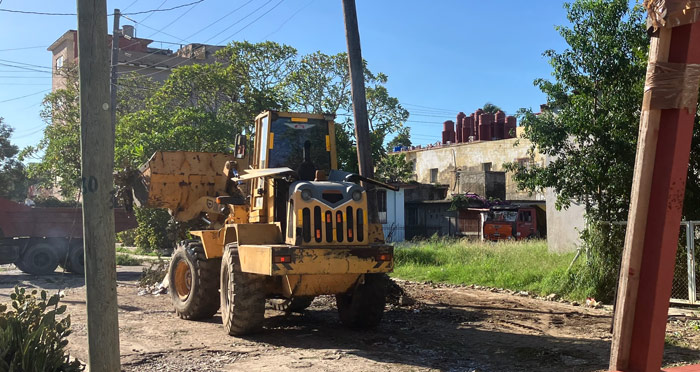
Ciclón limpieza: A few days after Hurricane Rafael hit Havana, crews were already clearing debris and trees and replacing power poles and wires, even in Marianao, a working-class district of Havana that tourists rarely see. Credit Leni Villagomez Reeves
Recuperation and Solidarity
Immediately after the event, recuperation efforts began. Cuba is in serious economic condition. The tightening of the U.S. blockade and the determined efforts of the U.S. government to prevent Cuba from accessing income or finance have been diabolically successful. We should be ashamed.
Yet, the crews are here, working tirelessly—clearing debris, restoring posts and lines. Most importantly, the people of Cuba are acting spontaneously: clearing up, checking on each other, and gathering bundles of goods for those who lost their possessions in this hurricane and the previous one, Oscar, which struck Guantánamo and other eastern provinces two weeks ago.
All the harm inflicted by U.S. governments over the past 65 years has not been able to break these people. Cooperation and human solidarity are deeply ingrained in the Cuban psyche now. In this darkest moment, Cubans feel neither isolated nor victimized. They stand together, fighting for a better future—an inspiration for what we all must do to actualize a world grounded in human solidarity for all!
