By Shaili Stockham, WILPF US intern
“Love & Legacy” is an essay series that explores how different cultures commemorate loss and death, transforming mourning into celebration and legacy, and turning that legacy into activism. We invite you to carry the legacy forward by honoring someone special through donations or bequests to WILPF US, helping to sustain our work. For more information about leaving a legacy at WILPF, please contact plannedgiving@wilpfus.org.
Qingming, also known as Qing Ming, Chingming, or Ching Ming, is a traditional holiday celebrated in Chinese cultures on the fifteenth day after the spring equinox, typically falling between April 3 and April 6. The characters for Qingming, 清明节, translate to “clean” or “pure,” “brightness,” and “festival.” Much like the Latinx holiday Día de los Muertos, Qingming is dedicated to remembering and honoring the deceased.
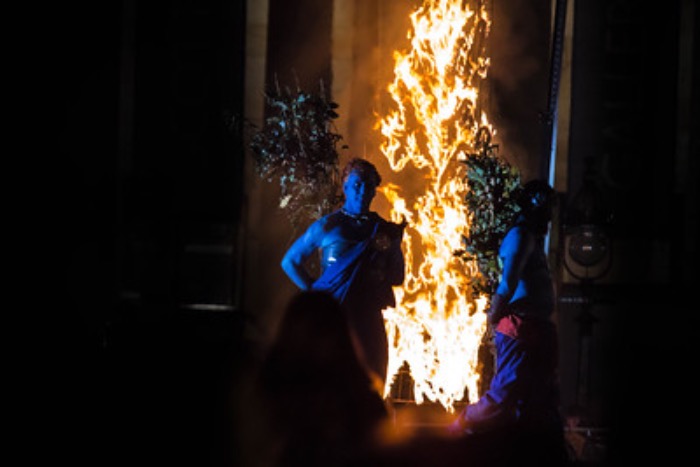
Qingming’s origins lie in ancestral worship, as described in Confucianism, but its rituals trace back to a nobleman named Jie Zitui, who lived between 771 BC and 476 BC. After Jie perished in a forest fire, his master ordered that no fire be used for several days in mourning. A year later, the master visited Jie’s tomb, swept it, and abstained from eating food cooked with fire. This act established the Cold Food Festival. Due to concerns about fatalities from the ban on fire during winter, authorities later moved the festival to the spring season. Over time, the Cold Food Festival merged with Qingming.
Qingming is also known as Grave-Sweeping Day. On this day, families and friends clean the tombs of their ancestors, clearing away grass and weeds as a sign of respect. Firecrackers are set off to ward off evil spirits and signal their presence to the departed. Offerings of rice, chopsticks, and alcohol are prepared for the dead, and loved ones often share a meal of the same foods. Incense and joss paper, or spirit money, are also burned for the deceased to use in the afterlife.
Activist Legacies: Spotlight on Chai Ling
While Qingming is primarily a day to honor the dead, it has also marked pivotal moments in history. For example, on April 4, 1976, more than two million people gathered in Tiananmen Square to mourn the late Premier Zhou Enlai, who had died after a four-year battle with cancer. Mao Zedong viewed this gathering as a threat to his authority and responded with a crackdown. Nearly thirteen years later, Tiananmen Square again became the site of significant protest—this time led by students opposing political and economic decisions that harmed citizens in the post-Mao era. At the heart of this movement was Chai Ling.

At just 23, Chai Ling became the “commander-in-chief” of the 1989 Tiananmen Square protests, leading thousands of students. She recalled, “We came to Tiananmen Square asking for reform to make the system better, but when the government sent tanks and troops to kill its very own children, its very own people, then that belief was completely crushed.” Chai had family in the military and was shocked to witness them turn against their own people.
After the army intervened, Chai Ling left China, fearing for her safety. Following a difficult journey, she settled in the United States, where she earned a master’s degree from Princeton’s Woodrow Wilson School and later attended Harvard Business School. Chai went on to found Jenzabar, a company focused on expanding access to higher education, and All Girls Allowed, a nonprofit aimed at ending gendercide and supporting education and health. She has received two nominations for the Nobel Peace Prize. Now an American citizen, Chai continues to hope for reform in China, stating, “The heart still remains to be a China one, and I hear the cries of the oppressed.”
“Love & Legacy” is an essay series exploring how cultures commemorate loss and death, turn mourning into celebration and legacy, and legacy into activism. We invite you to carry the legacy forward: honor someone special by donating in memoriam or making a bequest to WILPF US to sustain our work. Contact plannedgiving@wilpfus.org to learn about leaving a legacy at WILPF.
Sources:
https://www.mandarinblueprint.com/blog/qingming-festival
https://www.chcp.org/Ching-Ming
https://www.thebristorian.co.uk/the-past-today/zhouenlai
https://www.cbsnews.com/news/25-years-later-protest-leader-looks-back-at-tiananmen-square
https://www.alumni.hbs.edu/stories/Pages/story-bulletin.aspx?num=5537